Home > News > “LVH” on an EKG: What it Means (and What it Doesn’t)
“LVH” on an EKG: What it Means (and What it Doesn’t)
Sep 15, 2026
“LVH” on an EKG means the test detected an electrical pattern that can be associated with left ventricular hypertrophy, or thickening of the heart’s main pumping chamber. However, an EKG cannot confirm that the heart muscle is actually thickened, and the finding does not automatically mean you have heart failure, permanent heart damage, or another serious condition. What “LVH” on an EKG means depends on your blood pressure, symptoms, medical history, and, in some cases, additional testing.
At CardioVascular Health Clinic, EKG findings are evaluated by cardiovascular specialists with expertise across cardiology, electrophysiology, vascular care, and advanced cardiovascular imaging. That depth of experience allows the team to look beyond a single test result and consider how it fits with the rest of your cardiovascular health. When an EKG suggests LVH or another abnormality, we can provide the additional evaluation and diagnostic testing needed to determine whether the finding reflects an underlying condition, a normal variation, or something that should be monitored more closely.
What Is an EKG and Why You Might Have One Done
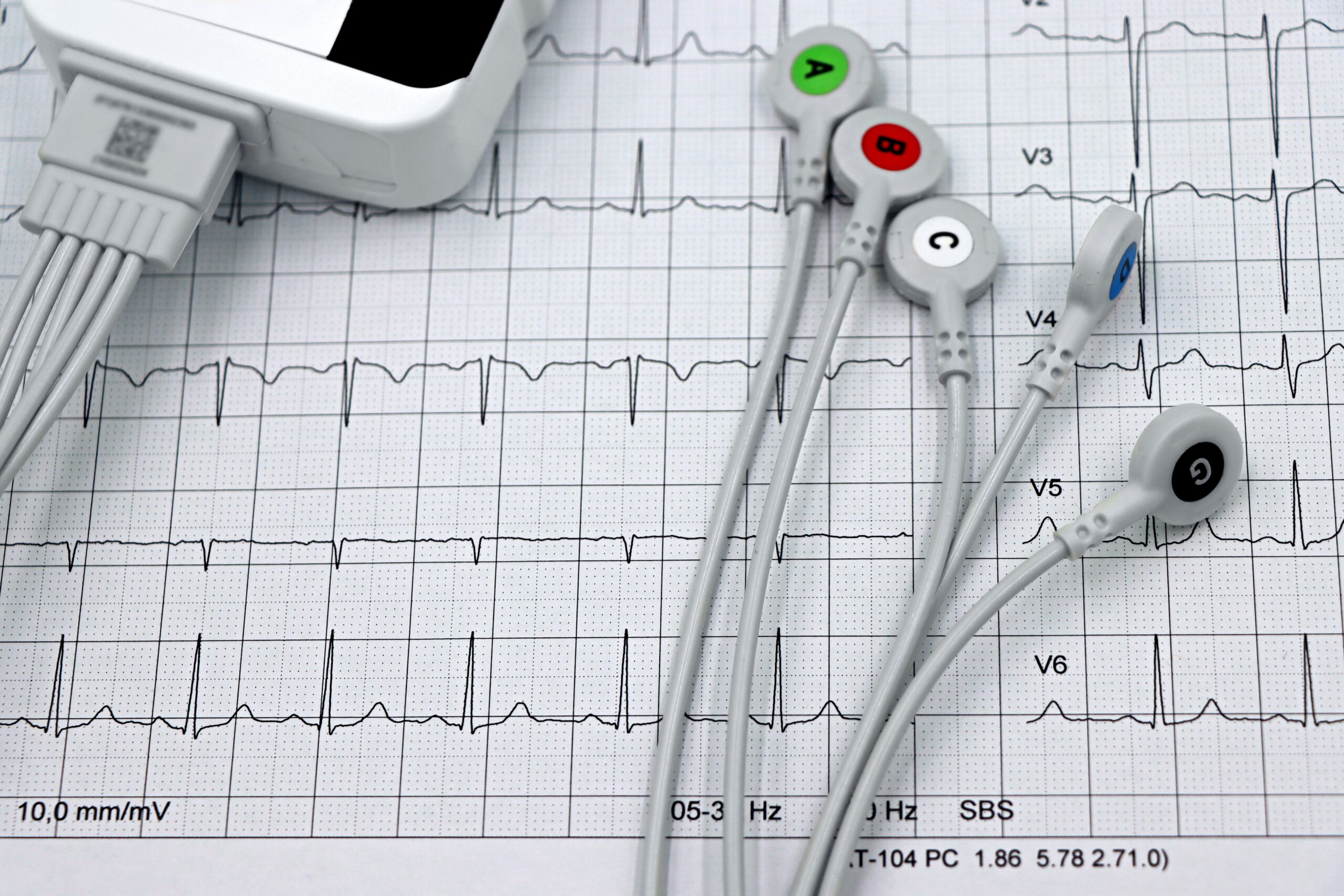
An electrocardiogram (EKG or ECG) records the electrical activity of your heart. Each heartbeat is triggered by an electrical signal that travels through the muscles of the heart in a coordinated pattern. An EKG records that pattern in real time by using ten electrodes (the small sticky pads) placed in specific locations on your body. The electrodes record the electrical currents in your body, which are represented on the display and printout as twelve leads, or waveforms.
Because it is quick, painless, and noninvasive, an EKG is often one of the first tests ordered when a patient has various heart symptoms. These may include chest discomfort, shortness of breath, dizziness, or palpitations. An EKG may also be done if you have high blood pressure, as part of a pre-operative exam, or during a routine cardiac assessment.
Patterns that suggest the heart might be working harder than usual.
An EKG does not show a picture of the heart’s size, shape, or structure, but it does provide valuable information that helps providers determine the next steps needed. In many cases, it can help rule out urgent problems. In other cases, it provides clues that more detailed testing may be necessary.
What is LVH?
Left ventricular hypertrophy (LVH) means that the muscle wall of the left ventricle has thickened. The left ventricle is the main pumping chamber of the heart. It pushes oxygen-rich blood out to the body through the aorta, and since it does the most work of the heart, it is especially sensitive to long-term strain. The thickening of the LVH usually develops gradually, often the result of long-standing, untreated high blood pressure.
When blood pressure is high, the heart must work harder to pump blood through narrower arteries. At first, the heart muscles will thicken to compensate for needing to work harder to pump blood, and the heart muscle grows stronger to meet that demand. Over time, however, heart muscle that has grown too thick is less flexible and pumps less efficiently.
Many people with early LVH have no symptoms at all. Others may have shortness of breath or mild chest discomfort. In more advanced cases, if LVH is not treated, it can increase your risk of heart rhythm problems or heart failure.
LVH on an EKG
When LVH appears on an EKG report, it means the electrical pattern recorded by the test meets certain criteria associated with left ventricular hypertrophy. An EKG cannot directly measure the thickness of your heart muscle. Instead, it records electrical signals as they move through your heart. Because of that, an EKG can provide an important clue that LVH may be present, but the result has to be considered alongside your blood pressure, symptoms, medical history, and, when appropriate, additional testing.
How LVH Shows Up on an EKG
When the muscle of the left ventricle becomes thicker, it can produce stronger electrical signals. On an EKG, this may appear as higher-voltage patterns in certain leads. Healthcare providers use established criteria to determine whether those patterns are consistent with LVH.
However, electrical patterns are not the same as a structural assessment of the heart. An EKG can suggest LVH, but it cannot show how thick the left ventricular wall actually is. Other factors, including body size, chest wall thickness, age, and physical conditioning, can also affect EKG readings and sometimes produce patterns that resemble LVH even when the heart muscle is structurally normal. This is why an EKG result should be interpreted in the context of the individual patient.
What LVH on an EKG Might Mean
When an EKG suggests LVH, it may be a sign that the heart has been working against increased resistance over time. In many adults, long-standing high blood pressure is the underlying reason. For someone who has not previously been diagnosed with hypertension, the finding may prompt a closer look at blood pressure. For someone who already has high blood pressure, it may reinforce the importance of keeping it well controlled with medication, home monitoring, and other recommended changes.
In some cases, if LVH is confirmed through imaging tests, such as an echocardiogram, treating the condition that is placing extra strain on the heart may help reduce that strain and, in some cases, allow the thickened heart muscle to improve over time.
An EKG pattern associated with LVH does not always indicate structural heart disease, however. This is particularly relevant in some younger or athletic individuals, who may meet EKG criteria for LVH even when imaging shows a structurally normal heart. The EKG finding is therefore a reason to consider the larger clinical picture rather than a diagnosis by itself.
What LVH on an EKG Does NOT Automatically Mean
Seeing LVH on an EKG does not automatically mean you have heart failure, permanent heart damage, or a condition that will require surgery or another invasive procedure. It also does not confirm that the left ventricular muscle is actually enlarged or thickened.
An EKG is one part of a cardiovascular evaluation. When it suggests LVH, the finding gives your healthcare provider information to consider alongside your symptoms, risk factors, blood pressure, and other test results. Depending on that overall picture, further evaluation may or may not be necessary.
When LVH on an EKG May Warrant Additional Testing
If an EKG suggests LVH and your healthcare provider needs a clearer picture of the heart’s structure, an echocardiogram may be recommended. This ultrasound test can directly evaluate the thickness of the heart muscle while also providing information about the heart’s pumping function, chamber size, and valve function. It can help determine whether true structural LVH is present and whether another heart condition may be contributing to the finding.
In addition to imaging tests, your doctor may review your blood pressure history, medications, cholesterol levels and family history, and discuss any symptoms you might be having. Depending on what that evaluation shows, your provider may recommend ambulatory blood pressure monitoring, closer home blood pressure monitoring, or changes to your treatment plan.
The Importance of Expert Interpretation of Your EKG
Interpreting an EKG requires more than matching a tracing to a set of criteria. Electrical patterns can be influenced by heart rhythm, body size, physical conditioning, electrode placement, and other cardiovascular conditions, which means similar-looking findings may have very different causes. An experienced provider considers the EKG alongside your symptoms, blood pressure, medical history, medications, and other test results to determine what the finding actually means.
At CardioVascular Health Clinic, EKG findings such as LVH are evaluated as part of a broader cardiovascular assessment. Our team includes specialists across multiple areas of heart and vascular care, allowing complex or unclear findings to be reviewed from more than one clinical perspective when needed. Advanced imaging and other diagnostic testing can then be used to confirm the diagnosis and place the EKG finding within the larger picture of your cardiovascular health.
LVH on an EKG is a signal, not a final diagnosis. It may reflect the effects of high blood pressure or another source of cardiac strain, or it may turn out to be a normal variation. The right interpretation helps determine whether anything further needs to be done.
Get a Clear Explanation of Your EKG with CardioVascular Health Clinic
CardioVascular Health Clinic provides comprehensive cardiovascular care for patients who need answers beyond a single test result. With specialists in cardiology, vascular care, electrophysiology, and advanced cardiovascular imaging, our team can evaluate how an EKG finding fits with your overall heart and circulatory health and coordinate additional testing or treatment when needed.
If you have questions about LVH or another finding on your EKG, the physicians at CardioVascular Health Clinic can help determine what it means in your specific situation and what, if any, next steps are appropriate.Contact us today to schedule a consultation.
We’re committed to timely, efficient, and affordable care.
Here is a collection of useful resources our new and existing patients need in one convenient location. Please let us know if you need additional information or have any questions.
I’m about one month out and things are so much better. At my two week evaluation my symptom score had gone from a 27 to a 7, and I’m sure it’s even better now. That speaks volumes. Now that I’m post recovery, there is no incontinence, I go to the bathroom much less and there are no ED side effects like there are with other procedures. In regard to my quality of life, well, I don’t maintain my life based on my proximity to a bathroom anymore.
- Blaine P., M.D.
Professional staff working in a beautiful facility with great doctors who sincerely care about their patients. Without Dr. Schmidt's skill, I would have needed heart bypass surgery instead of a stent. Follow-up has been thorough. I can't recommend them highly enough.
- LeAnn H.
Dr. Jim Melton and all the staff are fantastic. He is an excellent surgeon and his team is GREAT!!!! I just had surgery at the surgery center, I have only great things to say about my experience. Without him I really don't think I would be here to write this. If you’re looking for a good cardiovascular team, they are a 5 star for sure.
- Susie H.
Dr. Parsons and staff are amazing. He truly listened to me from the consult. Staff showed genuine care for my progress post procedure. I had my follow up appointment today so satisfied with results. Blake made me comfortable from the start. He is an activist for uterine fibroids treatment beyond the standard.
- Tamara M.
Professional and caring staff. Dr. Smith is very knowledgeable and shows genuine concern for your personal health. I enjoyed the background music in the procedure room, it really adds to the relaxing atmosphere.
- David L.
Dr. John Schrader is the most personable doctor we know. He stays on top of my dads health care and is genuinely concerned about his health. We never leave his office with questions. He answers them all. Even questions we don’t think of. Always professional but never cold or bad bedside manner. In our opinion he is THE BEST around. Thank you Dr Schrader.
- Kathy J.
I came to Dr. Warren by a self referral for mals when it took me 8yrs 50+ doctors and thousands of dollars spent on no answers. My first visit I was scared I was just going to be gaslighted just like the past however I was pleasantly shocked when Dr. Warren immediately believed me. She took the time to review many disk I had brought from past tests. She never once dismissed me and listened to ever word I had to say. She scheduled one last test to confirm the diagnosis then I was scheduled for surgery right away. Surgery was a success and I can’t thank her and her staff enough. Dr. Warren truly saved my life.
- Angie W.
Dr. Garner literally saved my life 18 months ago and I've followed him to his new practice with Cardiovascular Health. He explains things so clearly, listens and is just a very nice person. His staff is great, too! I highly recommend!
- D Watts
Some of the nicest staff that I have ever dealt with!! They have been so incredibly awesome to my mom!! Would definitely recommend them to anyone!! Thank you so much for being so great with her!!
- Christy G.
The staff, the nurses, and Dr. Parsons were all amazing. Everything was simple and went well – very Bravo Zulu (military phrase meaning "well done"). In addition to the great staff at CardioVascular Health Clinic, the facilities were clean and well maintained. I have no complaints about anything. The whole experience was A1. I would recommend Dr. Parsons to anyone. He made a huge impact on my life.