Home > News > Oklahoma Baseball Hall of Famer celebrates biggest save of his life after innovative procedure spared his leg
Oklahoma Baseball Hall of Famer celebrates biggest save of his life after innovative procedure spared his leg
Jun 29, 2026
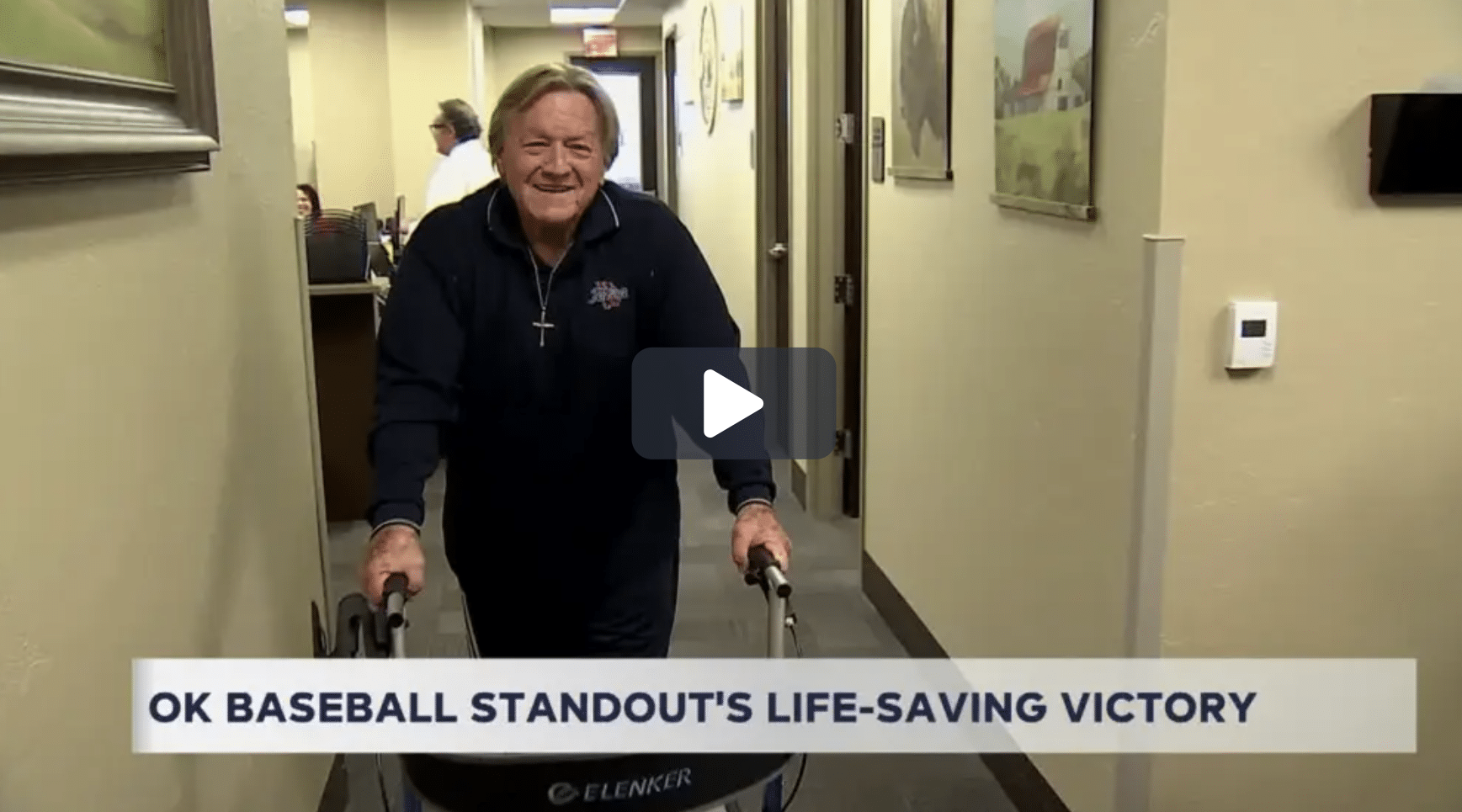
For decades, Steve Chrisman built a life around baseball. The former University of Tulsa Baseball Hall of Famer started playing at age 7, eventually becoming a junior college All-American and helping Tulsa finish as national runner-up in the 1969 College World Series.
“God gave me the ability to be accurate,” Chrisman said. “I was the only kid on the team to get those strikes.”
At 77, however, Chrisman found himself facing a challenge far bigger than any game he had ever played. Severe circulation problems and painful wounds that would not heal threatened to cost him his leg.
“I was really scared I was going to lose some legs, and you saved me,” Chrisman told his doctor during a follow-up appointment.
Chrisman sought treatment from vascular surgeon Dr. Carlos Rueda at Cardiovascular Health Clinic in Oklahoma City. Dr. Rueda said Chrisman’s condition was serious and required immediate attention.
“If you’re not getting enough blood flow and you develop a wound, that wound can progress rapidly to the point that it becomes necrotic, infected, and you could lose a toe, half your foot or the whole leg,” Dr. Rueda said.
An initial bypass surgery failed, forcing doctors to pursue a more complex and less conventional approach. Chrisman had only one artery below the knee supplying blood to his foot instead of the three most people have, making treatment especially challenging.
Dr. Rueda used newer stent technology and accessed the artery from both Chrisman’s foot and groin to restore blood flow in what he described as a “Hail Mary” effort.
The procedure worked. Blood flow returned, Chrisman’s wounds healed and he avoided amputation.
“When my patients have a good outcome and they’re happy, there’s really nothing better,” Dr. Rueda said.
Now, Chrisman is back on his feet and grateful for a second chance.
“Baseball was very good to me,” he said. “Very good.”
But the biggest save of his life happened far away from the baseball field.
“I wouldn’t know what I’d do without that leg,” he said. “You know, he’s great, man.”
Doctors say recognizing the warning signs of poor circulation early can help prevent serious complications and improve outcomes for patients.
We’re committed to timely, efficient, and affordable care.
Here is a collection of useful resources our new and existing patients need in one convenient location. Please let us know if you need additional information or have any questions.
I’m about one month out and things are so much better. At my two week evaluation my symptom score had gone from a 27 to a 7, and I’m sure it’s even better now. That speaks volumes. Now that I’m post recovery, there is no incontinence, I go to the bathroom much less and there are no ED side effects like there are with other procedures. In regard to my quality of life, well, I don’t maintain my life based on my proximity to a bathroom anymore.
- Blaine P., M.D.
Professional staff working in a beautiful facility with great doctors who sincerely care about their patients. Without Dr. Schmidt's skill, I would have needed heart bypass surgery instead of a stent. Follow-up has been thorough. I can't recommend them highly enough.
- LeAnn H.
Dr. Jim Melton and all the staff are fantastic. He is an excellent surgeon and his team is GREAT!!!! I just had surgery at the surgery center, I have only great things to say about my experience. Without him I really don't think I would be here to write this. If you’re looking for a good cardiovascular team, they are a 5 star for sure.
- Susie H.
Dr. Parsons and staff are amazing. He truly listened to me from the consult. Staff showed genuine care for my progress post procedure. I had my follow up appointment today so satisfied with results. Blake made me comfortable from the start. He is an activist for uterine fibroids treatment beyond the standard.
- Tamara M.
Professional and caring staff. Dr. Smith is very knowledgeable and shows genuine concern for your personal health. I enjoyed the background music in the procedure room, it really adds to the relaxing atmosphere.
- David L.
Dr. John Schrader is the most personable doctor we know. He stays on top of my dads health care and is genuinely concerned about his health. We never leave his office with questions. He answers them all. Even questions we don’t think of. Always professional but never cold or bad bedside manner. In our opinion he is THE BEST around. Thank you Dr Schrader.
- Kathy J.
I came to Dr. Warren by a self referral for mals when it took me 8yrs 50+ doctors and thousands of dollars spent on no answers. My first visit I was scared I was just going to be gaslighted just like the past however I was pleasantly shocked when Dr. Warren immediately believed me. She took the time to review many disk I had brought from past tests. She never once dismissed me and listened to ever word I had to say. She scheduled one last test to confirm the diagnosis then I was scheduled for surgery right away. Surgery was a success and I can’t thank her and her staff enough. Dr. Warren truly saved my life.
- Angie W.
Dr. Garner literally saved my life 18 months ago and I've followed him to his new practice with Cardiovascular Health. He explains things so clearly, listens and is just a very nice person. His staff is great, too! I highly recommend!
- D Watts
Some of the nicest staff that I have ever dealt with!! They have been so incredibly awesome to my mom!! Would definitely recommend them to anyone!! Thank you so much for being so great with her!!
- Christy G.
The staff, the nurses, and Dr. Parsons were all amazing. Everything was simple and went well – very Bravo Zulu (military phrase meaning "well done"). In addition to the great staff at CardioVascular Health Clinic, the facilities were clean and well maintained. I have no complaints about anything. The whole experience was A1. I would recommend Dr. Parsons to anyone. He made a huge impact on my life.