Home > News > How to Identify Heart-Related Chest Pain
How to Identify Heart-Related Chest Pain
Jul 10, 2025
Chest Pain: A Common Reason for Seeking Emergency Care
Heart-related chest pain often feels like pressure, tightness, or heaviness in the chest and may radiate to the arm, jaw, or back. It can also cause shortness of breath, nausea, or dizziness, especially during physical exertion. The main distinction between heart-related chest pain and other types of chest pain is how the pain presents and responds to activity. Heart-related chest pain often worsens during physical exertion and eases with rest, whereas non-cardiac pain may vary with posture, movement, eating, or breathing.
Chest pain is one of the most common reasons people seek emergency care. Every year, more than 6.5 million people go to the ER for chest pain, and another 4 million see their doctors about it. But not all chest pain is caused by a heart problem — and not all heart problems cause chest pain in the same way. Knowing how to tell the difference can save your life.
The specialists at CardioVascular Health Clinic are uniquely experienced in diagnosing and treating a wide range of cardiovascular conditions—including heart-related chest pain—using a patient-focused, minimally invasive approach. Our board-certified interventional cardiologists, vascular surgeons, and interventional radiologists use advanced diagnostic tools to accurately identify issues and create tailored treatment plans that can improve both your heart health and your overall quality of life.
Heart-Related Chest Pain: What Does it Feel Like?
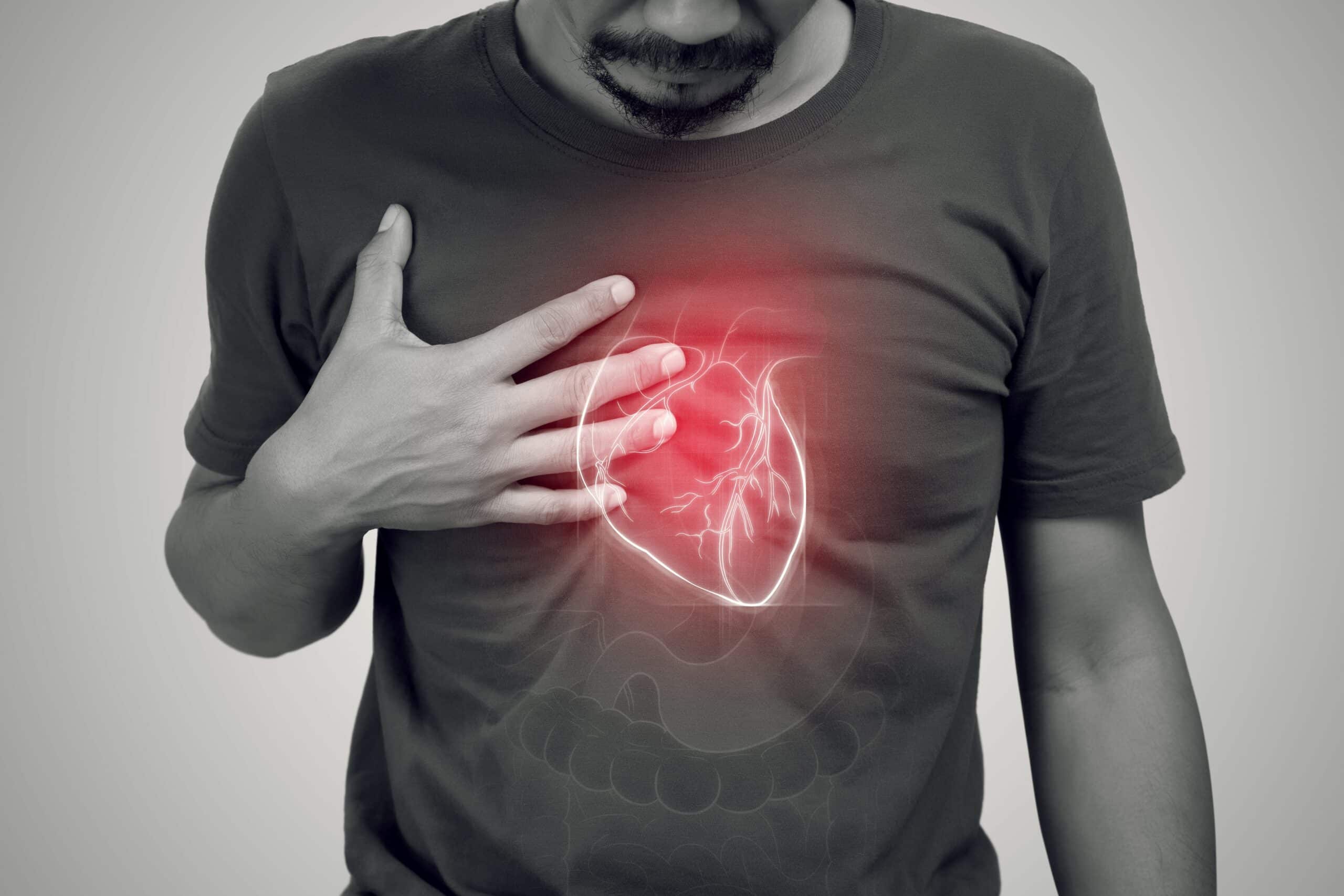
Heart-related chest pain, also known as cardiac chest pain, typically stems from reduced blood flow to the heart muscle. This can happen when the coronary arteries become narrowed or blocked, limiting the amount of oxygen that reaches the heart.
Chest pain caused by heart disease often feels like pressure, heaviness, or tightness in the chest. Some people describe it as a squeezing or burning sensation, or say it feels like something is sitting on their chest. The discomfort may start gradually or suddenly and typically affects the center or left side of the chest.
Heart-related chest pain usually feels dull and persistent, although with some conditions it may feel sharp and stabbing. The pain may radiate to the left arm, shoulders, neck, jaw, or upper back.
Other common symptoms that can accompany heart-related chest pain include:
Shortness of breath
Cold sweats or clammy skin
Lightheadedness or dizziness
Fatigue or weakness
Nausea or a sense of indigestion
These symptoms may come on with physical exertion or emotional stress and tend to improve with rest, especially in cases of stable angina. However, if they don’t go away or keep returning, it could be a warning sign of something more serious.
It’s also important to note that women and older adults may have fewer classic symptoms or they may be more subtle. Instead of chest pressure or squeezing, they may have:
Anxiety
Unusual tiredness or weakness
Discomfort in the neck, arms, or shoulders
Nausea or indigestion
Shortness of breath, with or without chest pain
These symptoms can be easy to dismiss, but they may still signal a heart problem.
Types of Heart-Related Chest Pain: Angina vs. Heart Attack
Two of the most common types of heart-related chest pain are angina and heart attack pain. Both are caused by reduced blood flow to the heart muscle, but there are important differences.
Angina is a temporary condition often triggered by physical activity or emotional stress. It usually improves with rest or medication like nitroglycerin. Angina may last a few minutes and is often a warning sign of coronary artery disease.
A heart attack, or myocardial infarction, occurs when the blood flow is completely blocked. This pain often lasts longer than a few minutes, may not go away with rest, and is typically more intense.
If you’re unsure which one you’re experiencing, don’t take chances. Call 911 immediately. It’s always best to seek immediate medical attention rather than risk delaying proper care.
Risk Factors for Heart-Related Chest Pain
Anyone can have chest pain that is related to the heart, but some people are more likely to experience it because of underlying health conditions or lifestyle factors.
Risk factors for experiencing some type of heart-related chest pain can include:
High blood pressure
High cholesterol
Smoking or tobacco use
Diabetes
Family history of heart disease
Obesity
Sedentary lifestyle
Age 65 and older
Even if you feel healthy, these conditions can increase your risk of developing coronary artery disease or other heart problems. Managing your risk factors through lifestyle changes, medication, and routine checkups is one of the best ways to prevent heart-related symptoms before they start.
4 Common Non-Heart Related Causes of Chest Pain
Not all chest pain means that there’s something wrong with your heart. In fact, many other conditions can cause chest pain.
Gastroesophageal reflux disease (GERD), which can cause burning pain in the chest after meals, often with a sour taste in the mouth.
Musculoskeletal pain, soreness that may feel sharp or tender and often worsens with movement or pressure on the chest wall.
Panic attacks, during which the chest tightness with rapid breathing, a racing heartbeat, and a sense of fear or anxiety.
Lung issues, including conditions like pleurisy or pulmonary embolism, which may cause a sharp pain that gets worse with deep breaths or coughing.
The key difference between heart-related chest pain and non-heart related chest pain is primarily how the pain behaves. Heart related pain tends to occur with exertion and improves with rest, while other types may change with body position, movement, eating, or breathing.
When to Call 911 About Your Chest Pain
You should call 911 right away if you experience chest pain that:
Lasts longer than 5-10 minutes or keeps coming back
Is severe or gets worse over time
Feels like intense pressure or squeezing
Spreads to your jaw, arms, neck, or back
Comes with shortness of breath, nausea, sweating, or lightheadedness
Occurs during or after physical exertion or stress
Even if your symptoms are mild, don’t try to self-diagnose. Call for emergency help rather than wait or drive yourself to the hospital. Heart problems can progress quickly, and getting help early can prevent major complications.
What to Expect During a Medical Evaluation for Your Chest Pain
If you are experiencing chest pain but are not sure if it is related to your heart or not, the experts at CardioVascular Health Clinic can use a range of tools to identify the cause of your pain and determine whether it’s associated with a heart condition.
Your evaluation may include:
Medical history and physical exam. Your doctor will ask about your symptoms, risk factors, and family history.
Electrocardiogram (EKG). This test measures the electrical activity of your heart to detect signs of a heart attack or irregular rhythm.
Stress test. A stress test measures how well your heart performs during physical activity.
Imaging tests.Tests like a CT scan, echocardiogram, or chest X-ray help assess the heart and surrounding structures.
Blood tests. Specific markers in the blood can help determine if there is damage to the heart or rule out other causes.
Ongoing monitoring or follow-up care. This may include regular appointments, medication adjustments, or additional testing.
CardioVascular Health Clinic combines state-of-the-art diagnostics with a compassionate, patient-centered approach to help you understand your symptoms, manage risk factors, and stay on track with your heart health.
Trust CardioVascular Health Clinic with Your Heart-Related Chest Pain
Heart-related chest pain isn’t always immediately life-threatening, but it should never be ignored. If you’re having chest discomfort — especially if it’s new, unexplained, or persistent — seek care right away. Getting checked out early can prevent serious complications and give you peace of mind.CardioVascular Health Clinic of Oklahoma is here to help you take the guesswork out of your symptoms. If you’re experiencing chest pain or have concerns about your heart, contact us to schedule a consultation with one of our specialists and start protecting your health today.
We’re committed to timely, efficient, and affordable care.
Here is a collection of useful resources our new and existing patients need in one convenient location. Please let us know if you need additional information or have any questions.
I’m about one month out and things are so much better. At my two week evaluation my symptom score had gone from a 27 to a 7, and I’m sure it’s even better now. That speaks volumes. Now that I’m post recovery, there is no incontinence, I go to the bathroom much less and there are no ED side effects like there are with other procedures. In regard to my quality of life, well, I don’t maintain my life based on my proximity to a bathroom anymore.
- Blaine P., M.D.
Professional staff working in a beautiful facility with great doctors who sincerely care about their patients. Without Dr. Schmidt's skill, I would have needed heart bypass surgery instead of a stent. Follow-up has been thorough. I can't recommend them highly enough.
- LeAnn H.
Dr. Jim Melton and all the staff are fantastic. He is an excellent surgeon and his team is GREAT!!!! I just had surgery at the surgery center, I have only great things to say about my experience. Without him I really don't think I would be here to write this. If you’re looking for a good cardiovascular team, they are a 5 star for sure.
- Susie H.
Dr. Parsons and staff are amazing. He truly listened to me from the consult. Staff showed genuine care for my progress post procedure. I had my follow up appointment today so satisfied with results. Blake made me comfortable from the start. He is an activist for uterine fibroids treatment beyond the standard.
- Tamara M.
Professional and caring staff. Dr. Smith is very knowledgeable and shows genuine concern for your personal health. I enjoyed the background music in the procedure room, it really adds to the relaxing atmosphere.
- David L.
Dr. John Schrader is the most personable doctor we know. He stays on top of my dads health care and is genuinely concerned about his health. We never leave his office with questions. He answers them all. Even questions we don’t think of. Always professional but never cold or bad bedside manner. In our opinion he is THE BEST around. Thank you Dr Schrader.
- Kathy J.
I came to Dr. Warren by a self referral for mals when it took me 8yrs 50+ doctors and thousands of dollars spent on no answers. My first visit I was scared I was just going to be gaslighted just like the past however I was pleasantly shocked when Dr. Warren immediately believed me. She took the time to review many disk I had brought from past tests. She never once dismissed me and listened to ever word I had to say. She scheduled one last test to confirm the diagnosis then I was scheduled for surgery right away. Surgery was a success and I can’t thank her and her staff enough. Dr. Warren truly saved my life.
- Angie W.
Dr. Garner literally saved my life 18 months ago and I've followed him to his new practice with Cardiovascular Health. He explains things so clearly, listens and is just a very nice person. His staff is great, too! I highly recommend!
- D Watts
Some of the nicest staff that I have ever dealt with!! They have been so incredibly awesome to my mom!! Would definitely recommend them to anyone!! Thank you so much for being so great with her!!
- Christy G.
The staff, the nurses, and Dr. Parsons were all amazing. Everything was simple and went well – very Bravo Zulu (military phrase meaning "well done"). In addition to the great staff at CardioVascular Health Clinic, the facilities were clean and well maintained. I have no complaints about anything. The whole experience was A1. I would recommend Dr. Parsons to anyone. He made a huge impact on my life.